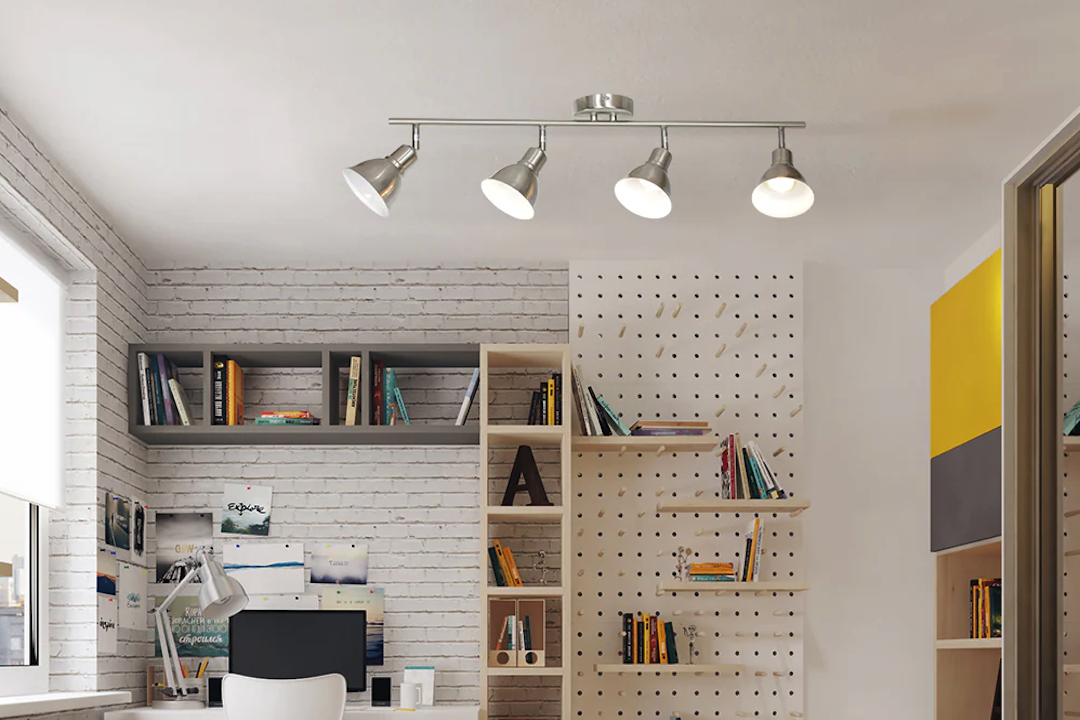
Let’s talk about modern brushed nickel track lighting for your study room. If you’re wondering if it’s a good fit, the short answer is: yes, it can be a really practical and stylish choice, especially if you’re looking for flexibility and a clean, contemporary look.
Why Brushed Nickel Track Lighting Makes Sense for a Study Room
Your study room is a space that needs to be functional, but also comfortable and conducive to concentration. You’re likely spending a good chunk of time in there, so good lighting is key. Brushed nickel track lighting offers a blend of aesthetic appeal and adaptability that can really enhance a study environment. It’s not just about throwing light Jayhull around; it’s about directing it where you need it most, without making your room feel like a sterile office.
The Aesthetic Appeal of Brushed Nickel
Brushed nickel, as a finish, has a soft, matte sheen. It’s not as shiny and reflective as polished chrome or brass, which can sometimes create distracting glare. This subtle elegance makes it a versatile choice that can complement a variety of decor styles, from minimalist and modern to more traditional or even industrial. It’s a neutral tone that doesn’t demand attention but adds a touch of sophistication.
- Subtle Sophistication: The brushed texture softens the metallic look, preventing it from feeling too cold or industrial. It can blend seamlessly with wood tones, paint colors, and other decor elements.
- Durability and Low Maintenance: Brushed nickel is quite forgiving when it comes to fingerprints and water spots, making it a practical choice for a room where you’re often interacting with surfaces. A quick wipe down is usually all that’s needed to keep it looking good.
- Modern but Timeless: While it’s a popular choice in contemporary design, brushed nickel isn’t a fleeting trend. Its understated nature means it’s likely to remain a stylish option for years to come, so you won’t feel the need to redecorate just because your fixtures are out of style.
Understanding Track Lighting: Flexibility is Key
The “track” part of track lighting is where the real magic happens for a study room. It’s essentially a long bar or rail that houses the light fixtures, and these fixtures can be moved and repositioned along the track. This inherent adjustability is what makes it such a smart choice for a space that often evolves.
- What is Track Lighting? Think of it as a modular system. You have a track, often mounted to the ceiling, and then individual light heads (the “heads” or “spots”) that connect to and slide along that track.
- Installation Options: Tracks can be mounted directly to the ceiling, or they can be suspended by rods from a higher ceiling, giving you different visual effects and ways to bring light down into the room. This is particularly useful if your ceiling isn’t ideal for direct mounting.
- Configurability: You can often add or remove fixture heads from the track, change the types of heads you use, and even connect multiple tracks together to cover larger areas. This means your lighting solution can grow and change with your needs.
Tailoring Light to Your Study Tasks
A study room isn’t just one monolithic space; it has different zones and activities. You might have your main desk, a reading chair, perhaps a shelf for reference materials that needs direct illumination. Track lighting excels at providing targeted light for these specific needs.
- Task Lighting for Your Desk: The most crucial aspect is ensuring you have adequate light for reading, writing, and computer work without eye strain. You can position track lights directly over your desk area. The ability to adjust the heads means you can direct the light precisely where you need it, minimizing shadows and glare on your screen or documents.
- Accent Lighting for Bookshelves and Displays: Got a collection of books you want to highlight? Or perhaps some artwork or decorative items on a shelf? You can use track lighting heads to cast a focused beam on these areas, adding depth and visual interest to your room.
- Ambient Lighting for Overall Comfort: While track lighting is often associated with focused light, you can also use wider-beam heads or position them to bounce light off the ceiling, creating a softer, more general illumination for the room. This is important so the room doesn’t feel like a series of spotlights and has a pleasant overall atmosphere.
Adapting to Your Study Room Layout
One of the biggest advantages of track lighting in a study is its ability to adapt to your room’s layout, which can often be less predictable than in a dedicated office.
- Ceiling Meddling? No Problem: If your ceiling has beams, an awkward slant, or recessed areas, track lighting can often navigate these challenges. You can run a track along a flat section or use connectors to piece together a system that works.
- Changing Furniture Layouts: Do you tend to rearrange your furniture every so often? Track lighting is your friend here. Instead of being locked into ceiling-mounted fixtures, you can simply slide the track heads to where your desk or reading nook is now located. It’s far less disruptive than having to replaster and repaint if you had to move a traditional ceiling light.
- Working Around Existing Features: Sometimes, you can’t move a ceiling fan or a ventilation duct. Track lighting systems can often be routed around these obstacles, ensuring you get light where you need it without compromising existing room features.
Types of Bulbs and Their Impact on Your Study
The type of bulb you choose for your brushed nickel track lights significantly impacts the quality of light and the mood of your study room. This is more than just choosing between LED and incandescent; it’s about color temperature and brightness.
Understanding Color Temperature (Kelvin)
This is a crucial factor for a study room. Color temperature describes the warmth or coolness of the light.
- Warm White (around 2700K-3000K): This light is cozy and inviting, similar to traditional incandescent bulbs. It’s good for creating a relaxed atmosphere, perhaps for casual reading in an armchair. However, for intense focus and tasks requiring fine detail, it might not be bright or crisp enough.
- Cool White/Neutral White (around 3500K-4000K): This is often considered the sweet spot for study rooms. It’s bright and energizing without being stark. It promotes alertness and is excellent for reading, writing, and screen work because it mimics natural daylight more closely.
- Daylight (5000K and above): This light is very cool and bluish. While it offers maximum brightness and can be good for specific tasks where accuracy of color is paramount (like art studios), it can feel too stark and less comfortable for extended periods in a study room, potentially leading to eye fatigue.
Brightness (Lumens) and Dimmability
Lumens measure the total amount of light output. You’ll want enough lumens for your tasks, but also the option to reduce brightness.
- Sufficient Lumens for Tasks: For desk work, aim for higher lumen output specifically directed at your workspace. Often, using multiple track heads with a decent lumen count is better than one overlit area.
- The Power of Dimmability: This is where track lighting really shines. If your track system and bulbs are dimmable, you gain immense control. You can have bright, focused light for late-night research sessions and then dim it down to a softer glow for winding down or when you’re not actively working. This adaptability is invaluable.
Choosing the Right Track Lighting System
Not all track lighting is created equal. There are different types of tracks and a vast array of fixture heads to choose from.
Types of Track Systems
- Monorail vs. Power-Trak: Monorail systems are often more decorative and flexible, allowing for curved tracks. Power-Trak (or similar systems like H-type or J-type) are more common for general lighting and offer a wider selection of fixtures. For a study room, a standard H-type or J-type track is usually the most practical and cost-effective.
- Recessed vs. Surface Mounted vs. Pendant: As mentioned, tracks can be installed directly on the ceiling (surface mounted), embedded within it (recessed, giving a very clean look), or hung down using rods. Surface-mounted is the most common and easiest to install. Recessed offers the sleekest finish. Pendant-style tracks can add a design element.
Selecting Track Heads
This is where you get specific. The “heads” or “spots” are what you’ll see and interact with.
- Spotlights vs. Floodlights: Spotlights provide a narrow beam of light, ideal for accenting specific items or providing intense task lighting. Floodlights cast a wider beam, useful for general illumination or lighting larger areas. For a study, you’ll likely want a mix, with spotlights for your desk and perhaps wider beams for general room light.
- Adjustability and Articulation: Look for heads that can swivel and tilt easily. This is essential for directing light precisely where you need it. Many heads offer 360-degree rotation and significant tilt angles.
- Integrated LED vs. Replaceable Bulbs: Many modern track lights have integrated LED modules. This means the light source is built-in and not replaceable like a traditional bulb. While they can be very energy-efficient and long-lasting, if the LED module fails, the entire fixture head may need to be replaced. Older systems might take standard bulbs (like GU10 or PAR bulbs), offering more flexibility to change bulb types and wattages. For a study, consider the lifespan and energy savings of integrated LEDs versus the ability to swap bulbs for halogen or different LED types.
Installation Considerations for Your Study Room
Getting track lighting installed is usually straightforward, but a few points can make the process smoother and ensure optimal results for your study.
DIY vs. Professional Installation
- Simple Setups: For a single, straightforward track mounted directly to the ceiling in a room with access to power, a DIY installation is often manageable for someone with basic electrical knowledge. Always follow manufacturer instructions and local building codes.
- Complex Systems: If you’re planning a more elaborate system, need to run power to a new location, or are uncomfortable with electrical work, hiring a qualified electrician is highly recommended. Safety first, always.
Placement is Paramount
- Over the Work Area: The most critical placement is over your primary workspace. Measure where your desk or primary work surface will be and position the track accordingly.
- Avoiding Glare: Think about where you sit and where your computer screen is. Position lights so they shine on your work, not directly into your eyes or causing reflections on your monitor. Use adjustable heads to fine-tune this.
- Ceiling Height and Track Type: If you have low ceilings, consider recessed track or track with low-profile heads. For higher ceilings, you have more options, including pendant-style tracks for a more dramatic effect.
Circuit Load and Power
- Don’t Overload: Ensure your electrical circuit can handle the total wattage of all the light heads you plan to install. An electrician can help you determine this.
- Extension Cords are Not Ideal: While tempting, relying on extension cords for track lighting is generally not recommended for safety and aesthetics. Wired connections are best.
Making the Most of Your Brushed Nickel Track Lights
Once installed, a few tips can help you maximize the benefits of your new lighting setup.
Strategic Lighting Adjustments
- Daily Tweaks: Don’t be afraid to adjust your track heads. As the sun moves across the sky, or as your activity changes from reading to writing, fine-tune the angle and intensity of the light.
- Seasonal Changes: In winter, you might need more artificial light for longer periods. In summer, you might rely more on natural light and adjust your track lighting accordingly.
Combining with Other Light Sources
- Layering is Key: Track lighting is excellent, but it’s often best when part of a layered lighting scheme. Consider adding a stylish desk lamp for direct, spill-proof light and a floor lamp in a corner for softer ambient light. This creates a more dynamic and comfortable environment.
- Natural Light Integration: Think about how your track lighting will complement your windows. You might position lights to balance out the shadows from natural light during the day and take over as dusk approaches.
By thoughtfully blending the sleek, modern appeal of brushed nickel with the practical, adaptable nature of track lighting, you can create a study room that is not only functional for work but also a pleasant and stylish space to spend your time. It’s about control, flexibility, and a clean aesthetic that supports concentration and comfort.